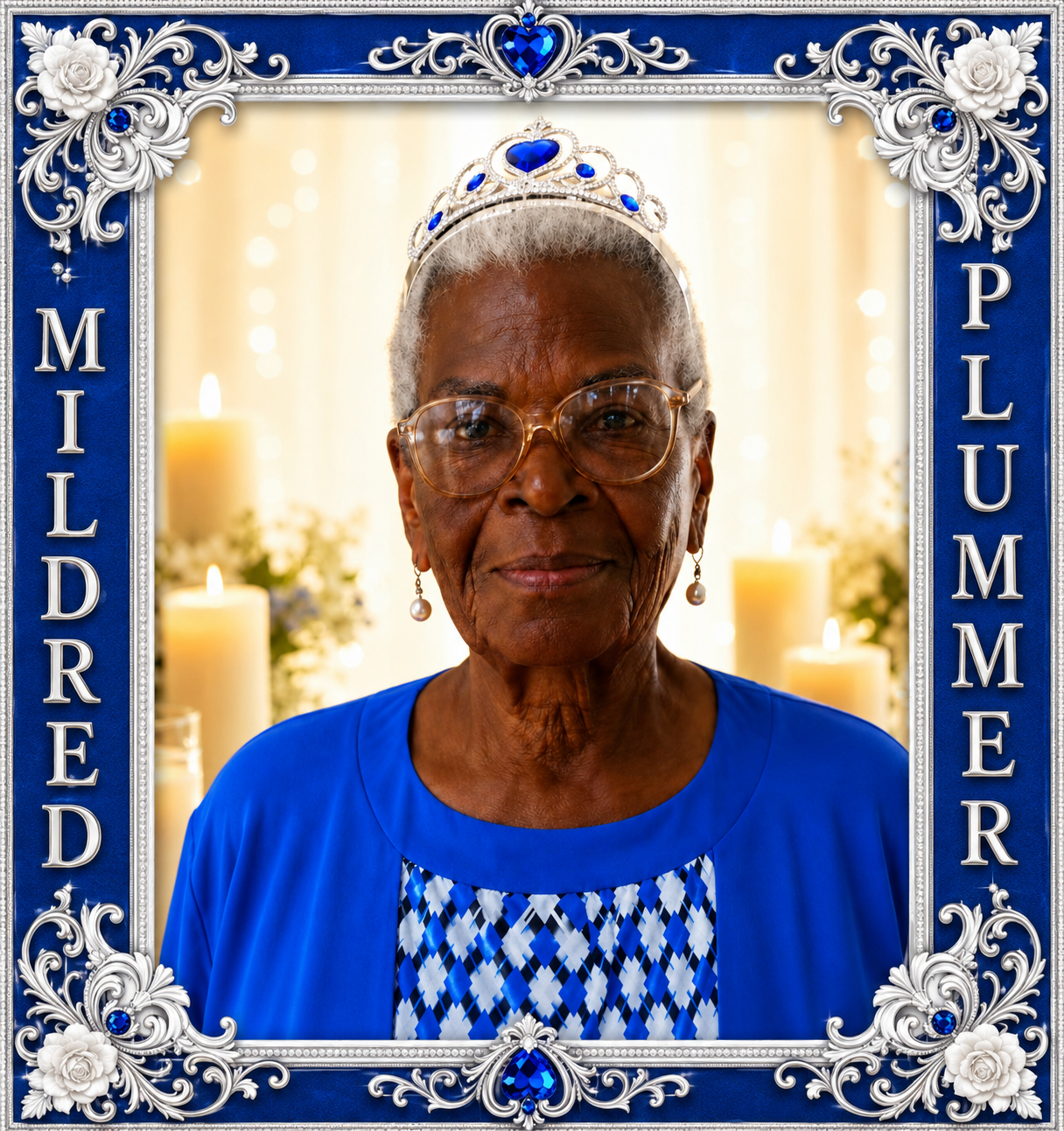
Eulogy
Hanging on: Memories of a Remarkable Matriach
Summary of Grandma's life and how she met her husband
Events she lived through
Memory Nuggets from her children
Memories from Anselma
... Stone soup <... Studying for U.S. Citizen Exam
Memories from Martin
One of the most indelible lessons my mother imparted was her philosophy: “If you die, you are wrong.” She would always say it emphatically in patois: “Sa ki mò an tò.” She repeated it whenever I embarked on a new venture—learning to drive, attending parties, traveling, or pursuing ambitious goals. At first glance, the phrase seemed to be about survival, but her meaning ran much deeper. It was not simply about staying alive; it was about being strategic enough to succeed.
To my mother, courage was admirable, but recklessness was not. She believed that no matter how noble your intentions or how worthy your cause, success required preserving yourself and your ability to continue. If your actions led to your own downfall, you could no longer achieve your goals, support your family, or contribute to your community.
She extended this philosophy to many aspects of life. In business, it meant avoiding risks that could destroy everything you had built. In leadership, it meant thinking several steps ahead rather than acting impulsively. In medicine, it echoed the principle of “first, do no harm.” In everyday life, it meant making decisions that balanced ambition with wisdom.
Over the years, I came to appreciate the depth of her teaching. “If you die, you’re wrong” was not a call to timidity; it was a call to prudence. It was a reminder that survival—whether physical, financial, emotional, or professional—is often the foundation upon which success is built.
My mother understood something that experience continually confirms: the goal is not merely to begin the journey with enthusiasm, but to remain in the game long enough to accomplish something meaningful.
Her words remain with me today, guiding decisions both large and small. Whenever I face uncertainty or contemplate a risky endeavor, I still hear her voice in patois: “Sa ki mò an tò.” Simple words, yet profound wisdom from a remarkable matriarch. From the outside, many people thought I was spoiled. As the only surviving boy among four sisters, they often assumed I was my mother’s favorite. They were only partly right.
My mother believed that no child should be helpless. From an early age, she insisted that I become self-sufficient. Her philosophy was simple: anything your sisters can do, you should be able to do as well. Sewing, washing, ironing, cooking, cleaning—these were not “women’s work” in her eyes; they were life skills. She would often say, “Anything a woman can do, you should be able to do too—except, of course, what only a woman can do.”
At the time, I did not fully appreciate the lessons she was teaching. Yet those skills proved invaluable throughout my life. During difficult financial periods, I made my own shirts from curtains to wear to parties. They served me well through university life, marriage, and later divorce. Even today, the benefits of those early lessons remain with me.
What spme mistook for favoritism was actually preparation. My mother was not raising a boy to be dependent on others; she was raising a man capable taking care of himself under any circumstances. For that gift, I remain grateful
Memories from Maureen
... Wedding day - walking me down the aisle <... First cruise trip to celebrate her 99th Birthday
Memories from Valerie
... Crab backs - assembly line<... Valerie choose another one
Memories from Maria
... Sunday cooking <... Being legally blind and Walking down the steps of my 70 year old houe